

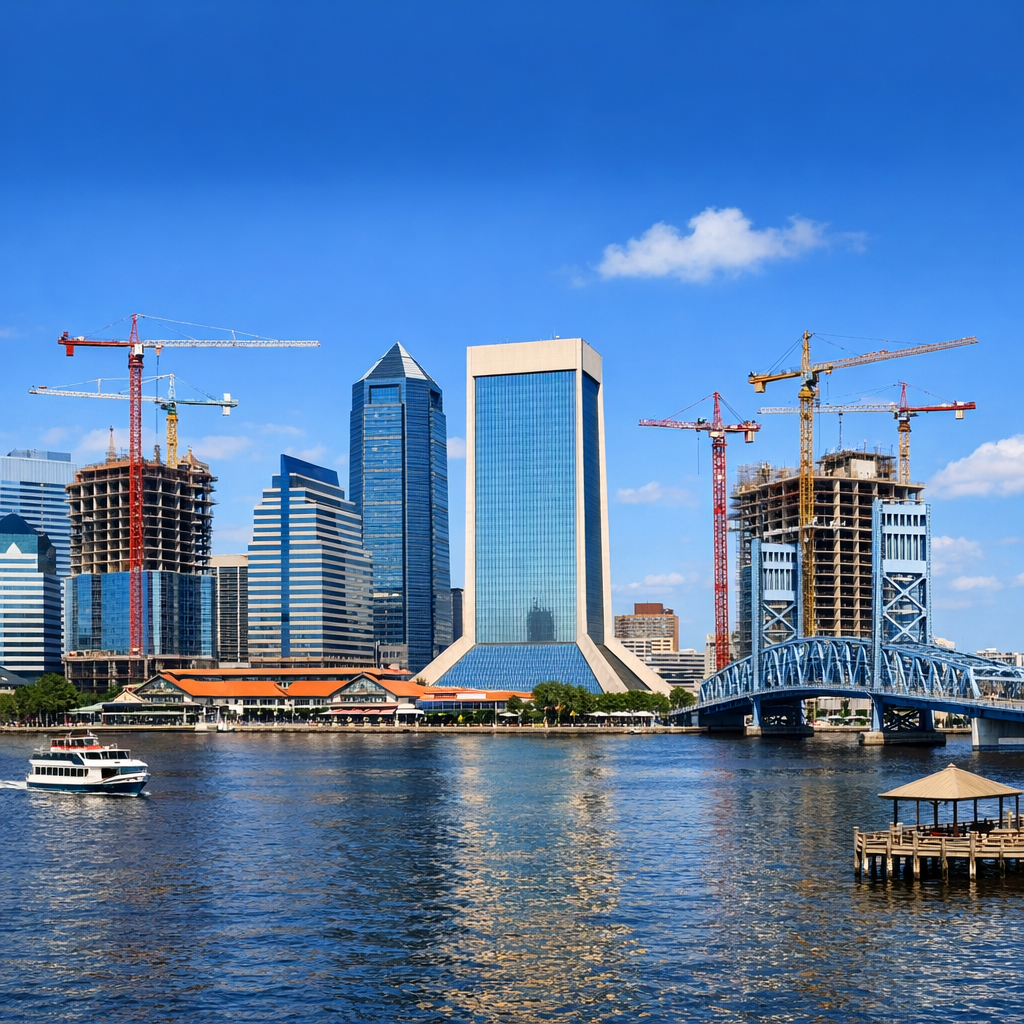
Jacksonville’s housing market continues evolving—expanding upward in the urban core, shifting in rental demand, and pushing forward with affordable housing. Whether you’re renting, buying, or following development, here’s a local‐grounded look at what’s happening across town.
Rents: Slight Fluctuations, Mixed Signals
The average rent in Jacksonville sits around $1,606 per month across all unit types—a figure that has ticked up slightly from last month but remains a bit below last year’s levels by about $19.
Studio rents average approximately $1,100, while two-bedroom units run closer to $1,384.
Though rents are moderate compared to many Florida metros, availability of rentals is hovering in the few-thousands, keeping competition steady. Residential demand continues, but growth seems tempered rather than booming.
Home Buying & Prices: Urban Core Rising
Housing in downtown is witnessing a notable transformation. The residential population downtown rose by over 20% in a single year, reaching more than 9,200 residents, nearly doubling since 2016.
Occupancy rates remain high in newly built units—around 96%. This signals strong interest in urban living when paired with walkable amenities, transit access, and proximity to restaurants, parks, and retail.
For buyers, price points for premium units—luxury townhomes or riverfront properties—are pushing well into high tiers, while other neighborhoods stay more attainable.
Affordable Housing: Growth & Policies in Action
The city is actively moving forward with affordable housing strategies. Local developers are delivering hundreds of new units across multiple neighborhoods, many reserved for households earning 60% or less of the area median income.
Commitments include thousands of units opened across Jacksonville’s Districts 7 and 8, with others in progress or planned. Initiatives now increasingly tie affordable housing to long-term funding, preserving affordability for decades.
Major Developments Redefining Neighborhoods
Several large projects are shaping Jacksonville’s future skyline. Key among them is Pearl Square, a nine-block mixed-use project bringing over 1,250 residential units, retail, green space, and a boutique hotel to the urban core. The “Vandeveer” building marks its first residential piece, expected to open with retail and restaurants along its ground floor.
On the Southbank, the Related Group has broken ground on its $202 million Southbank Residences project—featuring luxury towers, mid-rise condos, riverfront views, and amenities aimed at upscale renters and buyers.
Also in progress: transit-oriented supply like Artea at Southbank, connecting housing to transit hubs, retail, and walkability.
What Buyers, Renters & Developers Should Watch
- Interest rates and financing options: Mortgage rates will continue to influence when buyers pull the trigger, especially in higher-price segments.
- Neighborhood trade-offs: Urban core living brings amenities but also higher price tags; outer neighborhoods may offer more value but longer commutes.
- Supply is growing, but timing matters: Many new builds are under construction now but delivery isn’t immediate—planning and zoning pipelines suggest some lag.
- Affordability programs gaining strength: If qualifying income, look into city programs; they’re spending more on preservation, eviction protections, and trust funds.
In short: Jacksonville’s housing market is dynamic. Renters see small changes month-to-month; homebuyers find luxury and demand concentrated downtown; affordable housing remains a policy priority; and several large developments are remaking key parts of the city. For those making decisions—where to rent, buy, or invest—location, amenities, and long-term affordability will continue to be defining factors.